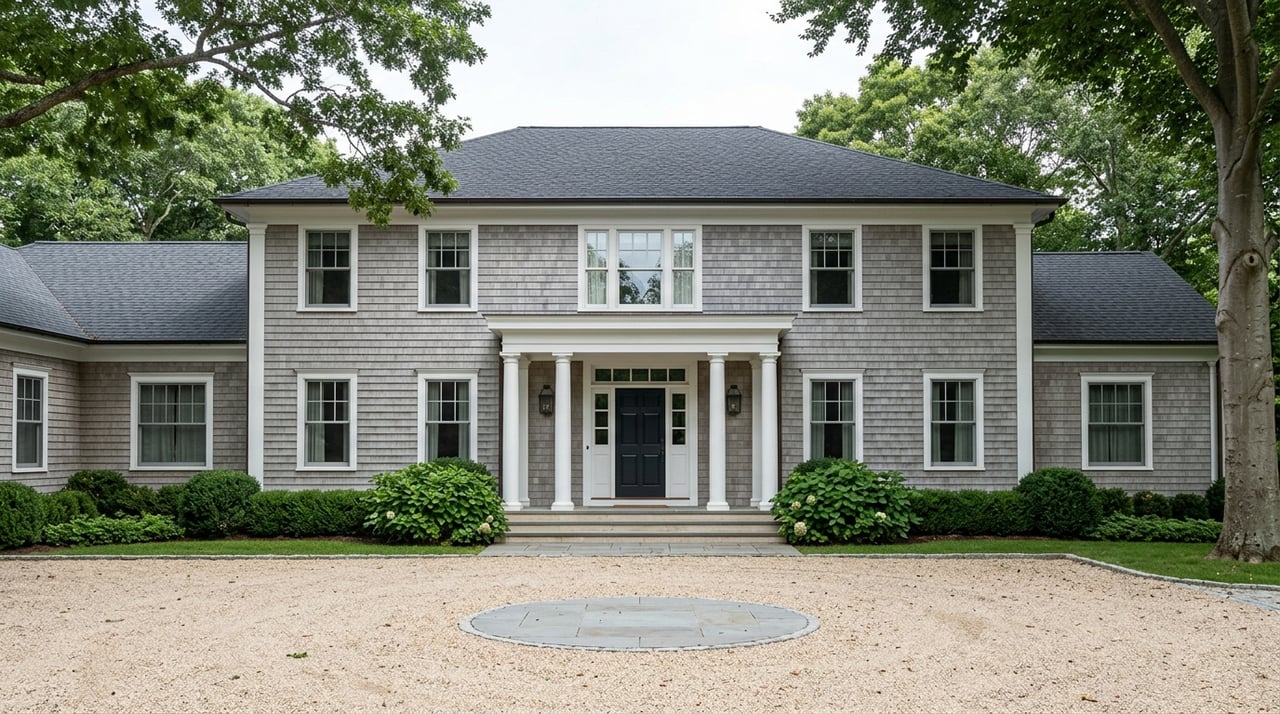
If you are drawn to homes that feel private, substantial, and deeply connected to the land, Old Westbury stands out right away. This is not a village defined by dense blocks or a single repeating house style. Instead, it is known for estate-scale properties, wooded roads, and architecture shaped as much by landscape as by walls and roofs. If you want to understand what gives Old Westbury its distinctive appeal, this guide will walk you through the history, planning, and design character behind it. Let’s dive in.
Old Westbury’s Estate Character
Old Westbury is a small, low-density village in northern Nassau County with an estimated 2025 population of 5,071 across 8.57 square miles. That works out to about 500.3 people per square mile, which helps explain why the area feels spacious and quiet compared with more typical suburban settings.
The housing pattern reinforces that impression. Census data shows a 92.6% owner-occupied housing rate and a median owner-occupied home value of $2,000,000+, while the village land-use study describes Old Westbury as a predominantly single-family residential community with large estates, golf courses, equestrian facilities, Old Westbury Gardens, and institutional uses.
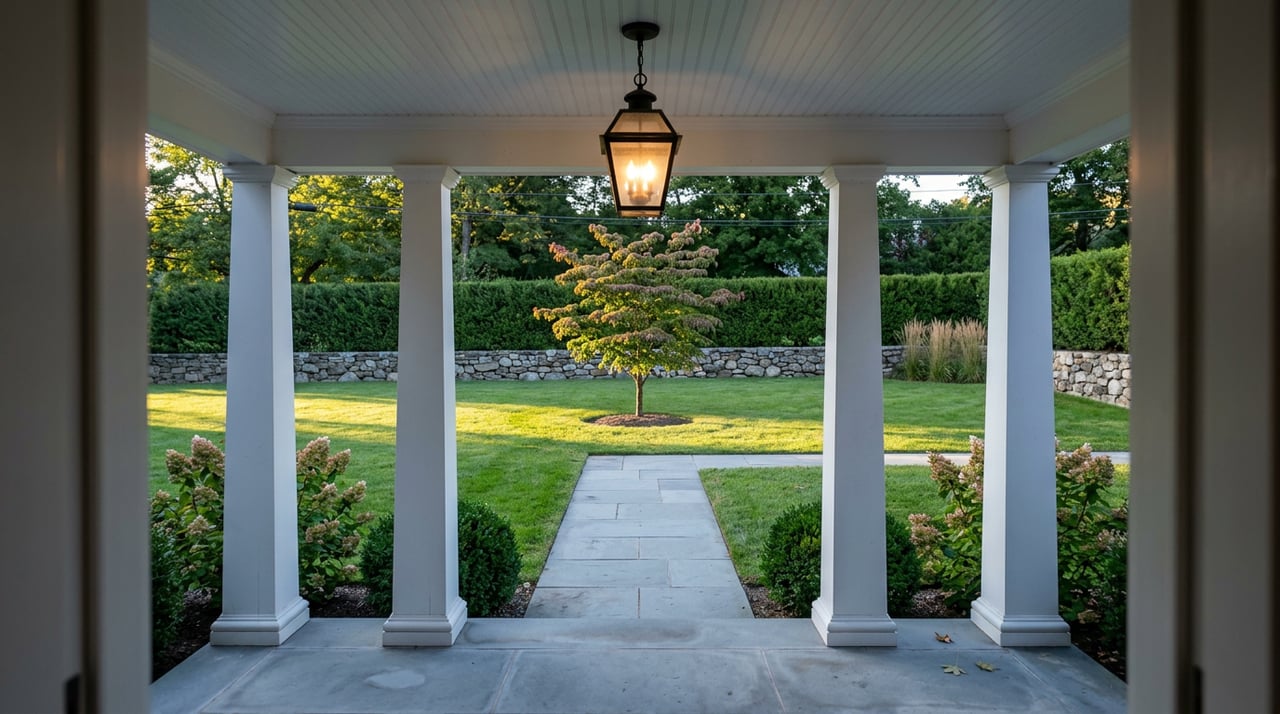
What many buyers notice first is the visual rhythm of the village. Long driveways, mature trees, vegetative buffers, and wooded road edges create a sense of separation between properties and preserve a distinctly estate-like setting.
How History Shaped the Village
Old Westbury’s architectural story starts well before its estate era. According to the village’s official history, the area was first settled in 1658 as Woodedge and later renamed Westbury by Quaker settlers.
For roughly 225 years, the area remained largely agricultural and isolated. The village history notes that it once consisted of 42 large self-sufficient farms along with related local businesses.
That changed in the late 1890s, when prominent New York City families were drawn to the rolling terrain and relative proximity to the city. Within about a decade, only nine Quaker farms remained, and much of the village had shifted into large estates that were often self-sufficient, from dairy farm to polo field.
The village was incorporated in 1924. After World War II, the breakup of some large estates led to new subdivisions, and by 1987 the village had up-zoned to four-acre residential properties while also creating lot averaging for large subdivisions.
Why Large Lots Matter in Old Westbury
A big part of Old Westbury’s identity comes from its zoning. The village land-use study explains that most of the village is zoned for large lots.
North of the Long Island Expressway, single-family homes generally require a four-acre minimum. South of the expressway, most areas are also zoned for two-acre or four-acre minimums, with only limited one-acre and smaller-lot areas in the southwest corner.
For you as a buyer or seller, that matters because zoning affects the look and feel of the entire village. Large minimum lot sizes help preserve setbacks, open space, privacy, and the broad landscaped settings that define estate living here.
Architecture Here Is About Setting
One of the most important things to understand about Old Westbury is that it is not defined by one dominant architectural style. The clearest pattern is an estate-scale framework rather than a single design vocabulary.
The village land-use study says about 95% of housing units are single-family detached homes. That gives the community a built environment that feels individualized and expansive, not repetitive or tract-driven.
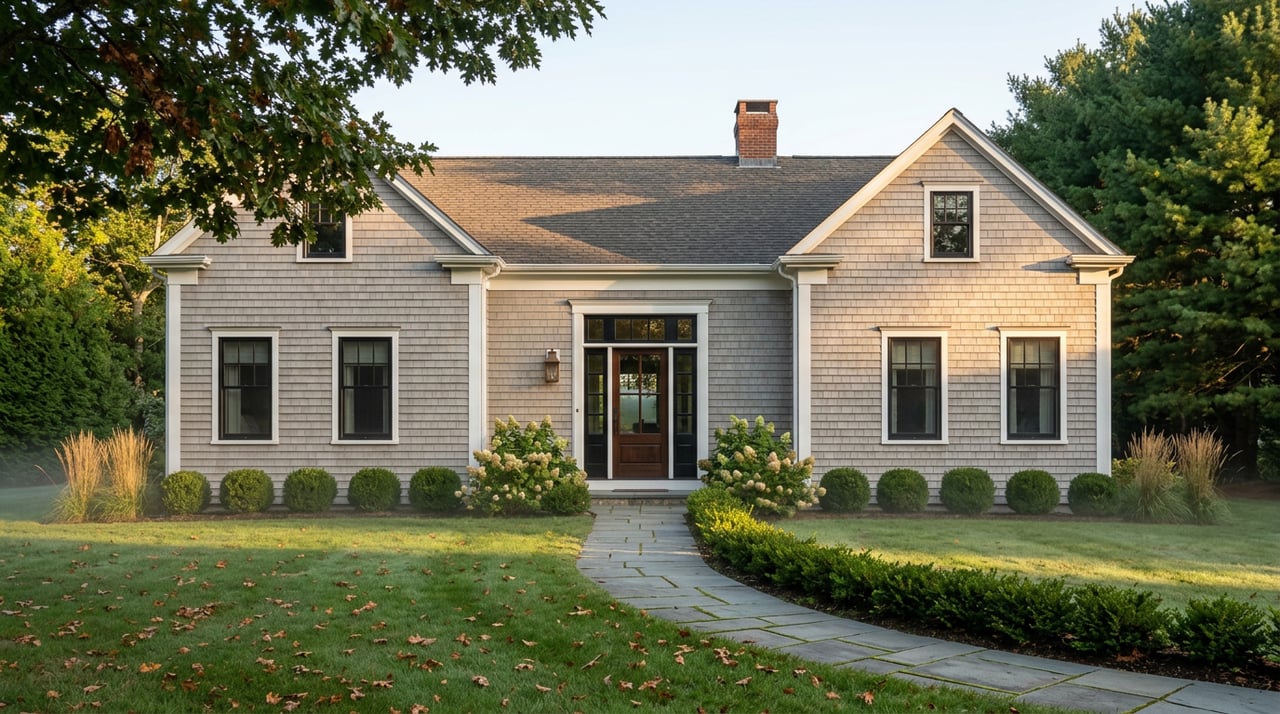
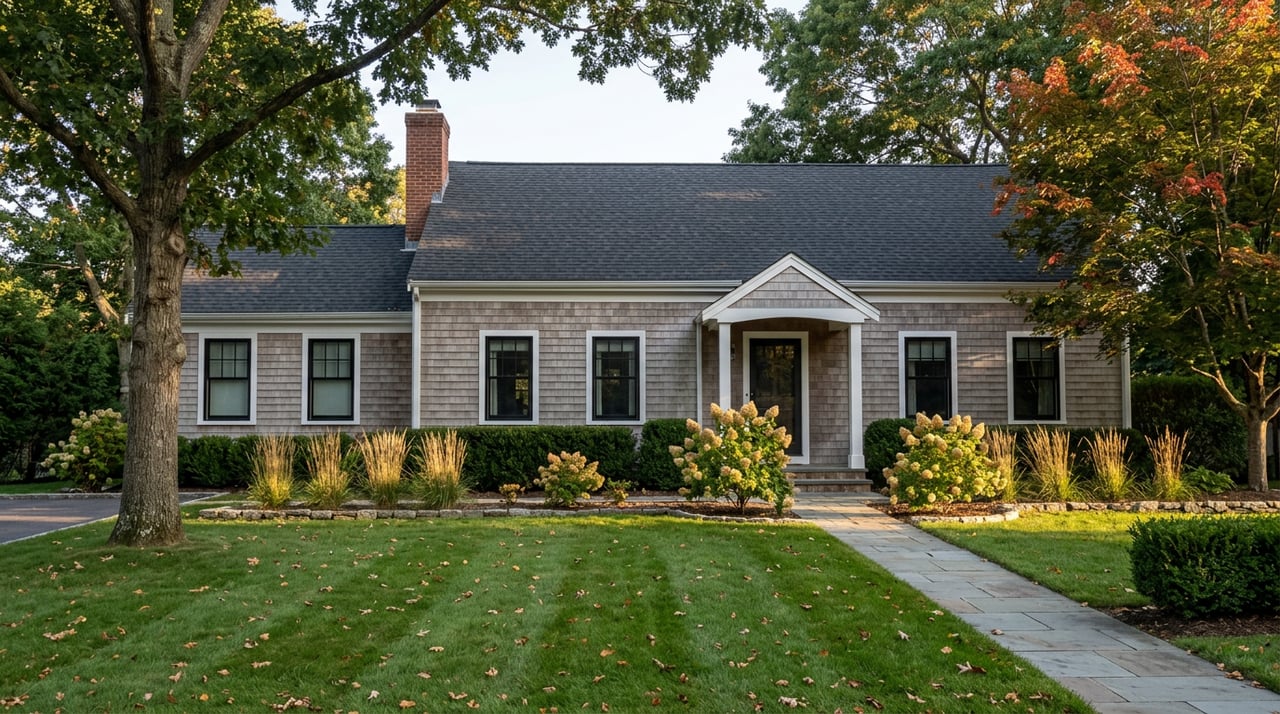
In practical terms, homes in Old Westbury are often tied together by scale, siting, and landscape more than by matching facades. You may see traditional, colonial, or contemporary influences, but the common thread is usually acreage, privacy, custom design, and strong integration with the land.
The Role of Custom Homes
Custom houses are a natural fit for a village with large parcels and long setbacks. The setting allows homes to be positioned thoughtfully, with room for drive courts, formal entries, gardens, pools, and broad lawns.
That freedom creates variety. Based on current listing patterns summarized in the research, Old Westbury includes everything from stately Colonials on more than four acres to transitional-contemporary estates and classic contemporary homes on expansive park-like grounds.
Landscape Is Part of the Architecture
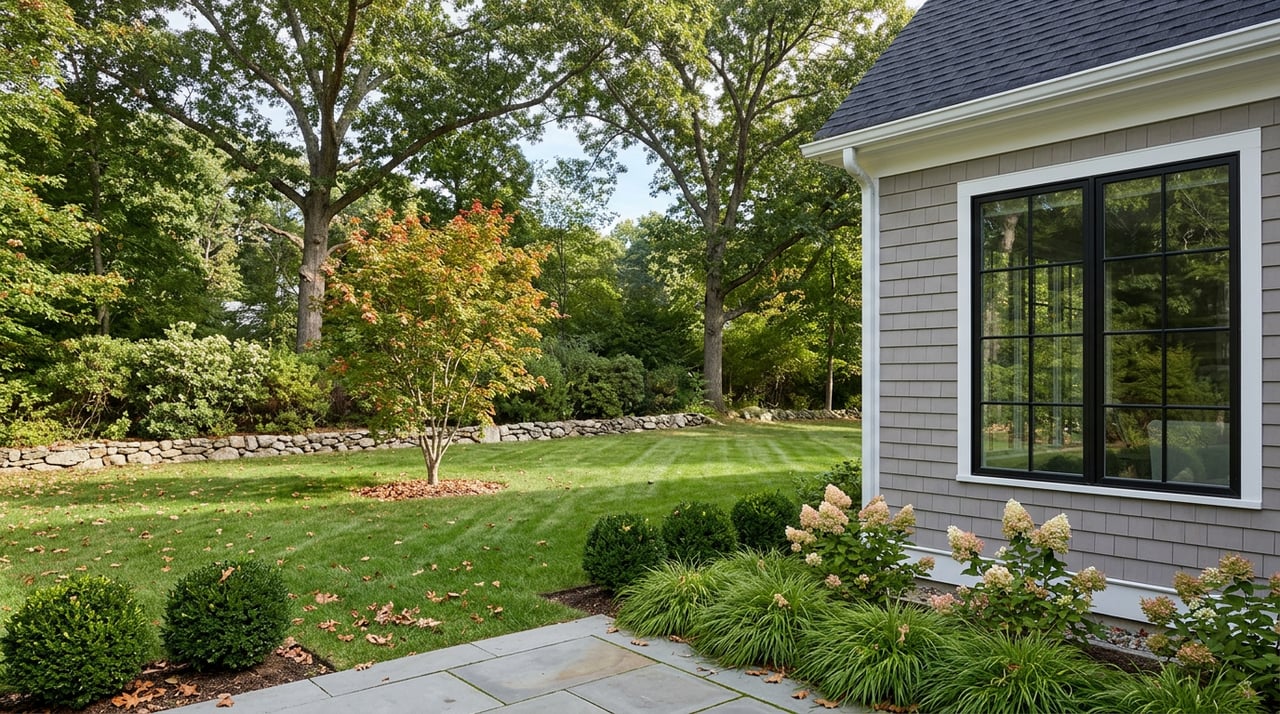
In Old Westbury, the landscape is not an afterthought. The village study highlights canopy preservation, buffer plantings, and road-edge screening as core parts of the community’s appearance.
That means the visual identity of a property often begins before you reach the front door. Tree-lined approaches, layered plantings, and deep setbacks shape the arrival experience and help maintain the calm, secluded feeling many buyers are seeking.
Old Westbury Gardens and Design Influence
No discussion of architecture in Old Westbury is complete without Old Westbury Gardens. The former home of John S. Phipps and his family was completed in 1906 by English designer George A. Crawley as a Charles II-style mansion set within formal gardens, landscaped grounds, woodlands, ponds, and lakes.
The organization’s mission is to preserve and interpret the early 20th-century American country estate through its landscape, gardens, architecture, and collections. The property, which spans roughly 200 acres, remains one of the clearest expressions of the estate tradition that shaped the village.
The village land-use study also points to the broader Phipps legacy in Old Westbury. It notes that sweeping allées and English landscape design at Old Westbury Gardens and the remaining Phipps Estate reflect an enduring design influence that still helps define the village’s visual character.
Preserving the Village Look
Old Westbury’s appearance is not just the result of history. It is also reinforced by local planning and review.
The Planning Board Sub-Committee handles architectural review for structures, alterations, or homes with a 20% increase in surface area. The village land-use study also recommends design guidelines that remain consistent and compatible with the village’s existing built form.
That kind of review helps explain why Old Westbury tends to feel cohesive even when homes vary in style. The village is not trying to create uniformity, but it does place value on compatibility, scale, and preservation of the broader landscape setting.
Trees and Road Edges Matter Too
The village and Friends of Old Westbury launched a Street Tree Planting Program in 2018. This effort supports the canopy-rich look that residents and visitors often associate with the area.
For homeowners, this means curb appeal in Old Westbury is often measured differently than in denser neighborhoods. The overall setting, including wooded edges and mature planting, can be just as important as the architecture itself.
What Buyers Often Appreciate
If you are considering Old Westbury, the appeal often comes down to a few defining qualities:
- Privacy created by acreage, setbacks, and screening
- Individuality through custom homes rather than repetitive subdivisions
- Landscape presence with mature trees, lawns, and formal or naturalistic plantings
- Historic resonance tied to the Gold Coast estate era
- Long-term consistency supported by zoning and architectural review
These qualities give the village a strong sense of place. For many buyers, that is the real value of Old Westbury living.
What Sellers Should Highlight
If you own a home in Old Westbury, your property story should go beyond square footage alone. Buyers are often responding to the total composition of the estate setting.
That can include the approach from the road, the depth of the front setback, the maturity of the landscaping, and how the house sits on the land. In a market like this, presentation matters because buyers are evaluating both architecture and environment.
For estate and luxury sellers, thoughtful preparation can help bring that story into focus. Batul Morbi’s boutique practice is built around high-touch listing and buyer representation, with concierge pre-market improvement programs, phased marketing campaigns, and full-service transaction management designed for premium homes across the North Shore.
Why Local Insight Matters in Old Westbury
Old Westbury is a market where broad descriptions do not tell the full story. Lot size, siting, zoning context, landscaping, and architectural compatibility all shape how a property is perceived.
That is why local knowledge matters so much here. When you understand the village’s estate history, large-lot framework, and preservation ethic, you can better evaluate what gives one property a different presence or value than another.
Whether you are buying or preparing to sell, Old Westbury rewards a careful, informed approach. If you want guidance on navigating estate homes and luxury properties on the North Shore, connect with Batul Morbi for knowledgeable, relationship-first support.
FAQs
What defines estate living in Old Westbury?
- Estate living in Old Westbury is shaped by large lots, single-family homes, deep setbacks, wooded buffers, and a strong emphasis on privacy and landscape.
What architectural style is most common in Old Westbury?
- Old Westbury is not defined by one single style. The stronger pattern is estate-scale design, where custom homes vary in style but are unified by acreage, siting, and landscaping.
How does zoning affect homes in Old Westbury?
- Much of Old Westbury is zoned for two-acre or four-acre residential lots, and areas north of the Long Island Expressway generally require four-acre minimums for single-family homes.
Why is Old Westbury Gardens important to Old Westbury architecture?
- Old Westbury Gardens is one of the village’s most important architectural landmarks and reflects the early 20th-century country estate tradition that helped shape the area’s identity.
What should home sellers emphasize when marketing an Old Westbury property?
- Sellers should highlight the full estate setting, including privacy, lot size, landscaping, setbacks, and how the home is positioned on the property, not just interior features.
Why do buyers need local guidance in the Old Westbury market?
- Buyers benefit from local guidance because Old Westbury values factors like zoning, architectural compatibility, landscape character, and estate setting, which can strongly influence how properties compare.