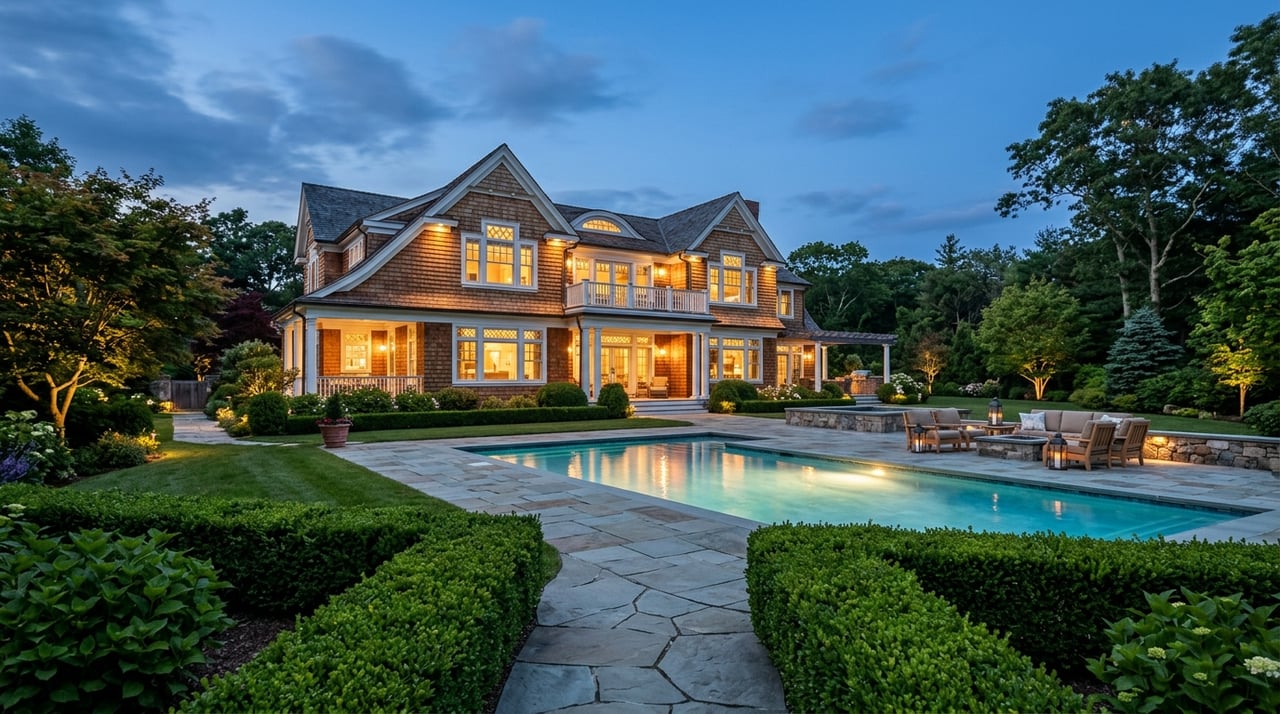
If you are considering Sands Point, your biggest decision may not be whether to buy in this village at all. It may be how you want to live once you get there. In a market defined by estate properties, the real choice often comes down to waterfront versus inland living, and each offers a very different day-to-day experience, value story, and resale path. Let’s dive in.
Sands Point at a Glance
Sands Point is a residential village at the tip of the Port Washington peninsula in Nassau County, less than 25 miles from Manhattan. The village describes itself as a quiet North Shore community spanning nearly 3,000 acres and home to more than 900 families.
Just as important, Sands Point is structured differently from many nearby markets. The village says all of it is zoned for single-family dwellings only, partial rentals are not permitted, and homes rely on private cesspools because there are no sewers.
Those details shape the market in a real way. They support a low-turnover, owner-occupied feel that many buyers are specifically seeking when they shop for a North Shore estate.
Sands Point Is a Thin Luxury Market
Inventory in Sands Point is typically limited, and that affects both buyers and sellers. Public market snapshots in spring 2026 showed only 13 to 17 homes for sale depending on the portal and date, with median list and sale figures in the multi-million-dollar range.
That kind of thin supply creates a highly segmented market. Two homes may both be large estate properties, but differences in water access, privacy, site usability, elevation, condition, and architecture can place them in very different pricing brackets.
For buyers, that means broad averages only tell part of the story. For sellers, it means smart positioning and careful presentation matter even more in order to capture the right audience.
What Waterfront Living Means
Waterfront is not one property type
In Sands Point, waterfront living is not limited to direct beachfront homes. It can also mean beach access, elevated water-view estates, or homes designed around open-water sightlines and outdoor enjoyment.
Current examples in the public market show that range clearly. Some properties offer direct beach access and expansive acreage, while others emphasize panoramic views, terraces, balconies, pools, or historic architectural character oriented toward Long Island Sound.
The lifestyle centers on views and access
When you buy waterfront in Sands Point, you are often paying for more than square footage. You are buying visual impact, shoreline experience, and the way the property connects you to the outdoors.
That could mean a private path to the beach, broad water views from main living spaces, or outdoor amenities that make the setting feel fully usable. In this segment, the experience of the site can matter as much as the house itself.
Waterfront homes can be more specialized
Waterfront inventory often tells a more specific story than inland inventory. The buyer pool can be narrower because preferences become more personal, with some buyers prioritizing direct access, others valuing elevated views, and others focused on legacy estate character.
That specialization can be a strength, but it also means resale tends to reward the details. A better view corridor, stronger outdoor layout, or more usable shoreline-oriented setting can make an outsized difference.
What Inland Living Means
Inland estates focus on land use
Away from the shoreline, Sands Point still functions as a true estate market. Inland homes commonly sit on roughly one-acre parcels, with larger holdings regularly available as well.
In this part of the market, buyers usually focus less on shoreline access and more on how the land performs. Privacy, setbacks, screening, driveway approach, and usable outdoor space often become the main priorities.
Privacy and flexibility are major draws
Inland estate living often appeals to buyers who want room to spread out without the added complexity of a shoreline site. Many inland homes feature pools, garages, central air, first-floor bedrooms, finished basements, and newer construction.
That can make inland properties especially attractive if your goal is everyday ease. You may get more straightforward outdoor use, simpler entertaining space, and a layout built around privacy rather than water orientation.
Inland options include redevelopment potential
Another key inland theme in Sands Point is redevelopment. Public listings have included buildable land and larger parcels, which suggests some buyers are entering the market to create a custom estate rather than purchase a finished home.
That opens a different path into the village. If your priority is designing around your own needs, an inland parcel or tear-down opportunity may offer more flexibility than a highly specialized waterfront site.
Waterfront Versus Inland: Key Tradeoffs
Choosing between waterfront and inland living usually comes down to what you value most in daily life and long-term ownership.
| Feature | Waterfront Estates | Inland Estates |
|---|---|---|
| Primary appeal | Views, shoreline access, outdoor experience | Privacy, land usability, flexibility |
| Site focus | Water orientation, elevation, access | Setbacks, screening, usable acreage |
| Buyer profile | Often more specialized | Often broader within estate buyers |
| Resale drivers | View quality, access, site story, condition | Privacy, layout, acreage, condition |
| Common amenities | Terraces, balconies, pools, beach access | Pools, garages, basements, central air |
Neither option is automatically better. The right fit depends on whether you are drawn more to a coastal estate lifestyle or to a land-driven estate with strong privacy and day-to-day usability.
Pricing Depends on More Than Water
It is easy to assume that waterfront always wins on price, but Sands Point is more nuanced than that. Public examples show a wide spread, from roughly $1.65 million for land, to inland homes around the low-to-mid $2 million range, to upper-tier estates well above that, including waterfront and inland trophy properties.
In other words, water is only one part of the pricing equation. Architecture, lot size, condition, privacy, elevation, and how usable the site feels all help separate one value tier from another.
That is especially true in a village with limited inventory. When supply is thin, small differences in site quality or renovation standards can affect buyer response and resale more than many people expect.
Village Rules Matter in Your Decision
Single-family zoning shapes the market
Because Sands Point is zoned for single-family dwellings only and partial rentals are not permitted, buyers should approach the village with a long-term ownership mindset. This is not a market built around mixed-use flexibility or casual rental strategies.
That structure supports the village’s distinct character. It also means your purchase decision should be grounded in how you plan to live in and maintain the property over time.
Site work and approvals can affect waterfront plans
In Sands Point, approvals are part of the value story, especially for more complex properties. The village states that its Board of Zoning Appeals has original jurisdiction over requests to build docks, and recent notices have involved fill permits, site-plan approvals, major structural alterations, and historic-site work.
For buyers considering waterfront or major redevelopment, this matters. If you want to change grading, drainage, shoreline features, or substantially rework an estate, the approval path may be more involved than in a typical suburban purchase.
Cesspools are part of ownership
Since the village has no sewers, homes rely on private cesspools. That is an important practical point whether you are comparing older estates, new construction, or land for future development.
It is one more reason why due diligence matters in Sands Point. Site conditions and utility realities should be evaluated alongside style, location, and amenities.
How Buyers Can Choose Wisely
If you are deciding between waterfront and inland living in Sands Point, start by getting clear on your daily priorities rather than leading with prestige alone.
Ask yourself:
- Do you want water views to shape your everyday living experience?
- Is direct beach access important, or would privacy on a large inland parcel suit you better?
- How much outdoor usability do you want for entertaining, recreation, or quiet retreat?
- Are you open to a property that may involve more approvals or site-specific planning?
- Do you prefer a move-in-ready estate or a parcel with redevelopment potential?
The best purchase in Sands Point is usually the one that matches your lifestyle closely. In a market this specialized, fit matters more than general category.
What Sellers Should Keep in Mind
If you own in Sands Point, your home is likely competing in a small but very discerning market. Buyers are not just comparing price per square foot. They are comparing setting, privacy, elevation, condition, outdoor use, and the full story of the property.
That is why presentation and positioning matter so much here. A waterfront home may need its access, views, and outdoor experience framed clearly, while an inland estate may need its land usability, privacy, and flexibility highlighted with equal care.
In a village where inventory is thin and buyers are selective, strategic marketing can help the right audience understand what makes your property distinct.
If you are weighing a move into or within Sands Point, Batul Morbi brings decades of North Shore experience, thoughtful guidance, and a high-touch approach to both buying and selling estate homes. To start the conversation, connect with Batul Morbi.
FAQs
What is the main difference between waterfront and inland living in Sands Point?
- Waterfront living usually centers on views, shoreline access, and outdoor experience, while inland living is more often defined by privacy, usable land, and flexibility.
Are most Sands Point homes single-family properties?
- Yes. The village states that all of Sands Point is zoned for single-family dwellings only.
Are rentals allowed in Sands Point homes?
- The village says partial rentals are not permitted.
Do Sands Point homes have sewer service?
- No. The village states that there are no sewers, so homes rely on private cesspools.
Does buying a waterfront home in Sands Point involve extra planning?
- It can. The village notes that its Board of Zoning Appeals has original jurisdiction over requests to build docks, and recent notices show approvals tied to fill permits, site plans, structural alterations, and historic-site work.
Is Sands Point only a waterfront market?
- No. While waterfront estates are a major part of the market, inland properties also make up a significant estate segment, often with large lots, pools, garages, and redevelopment opportunities.