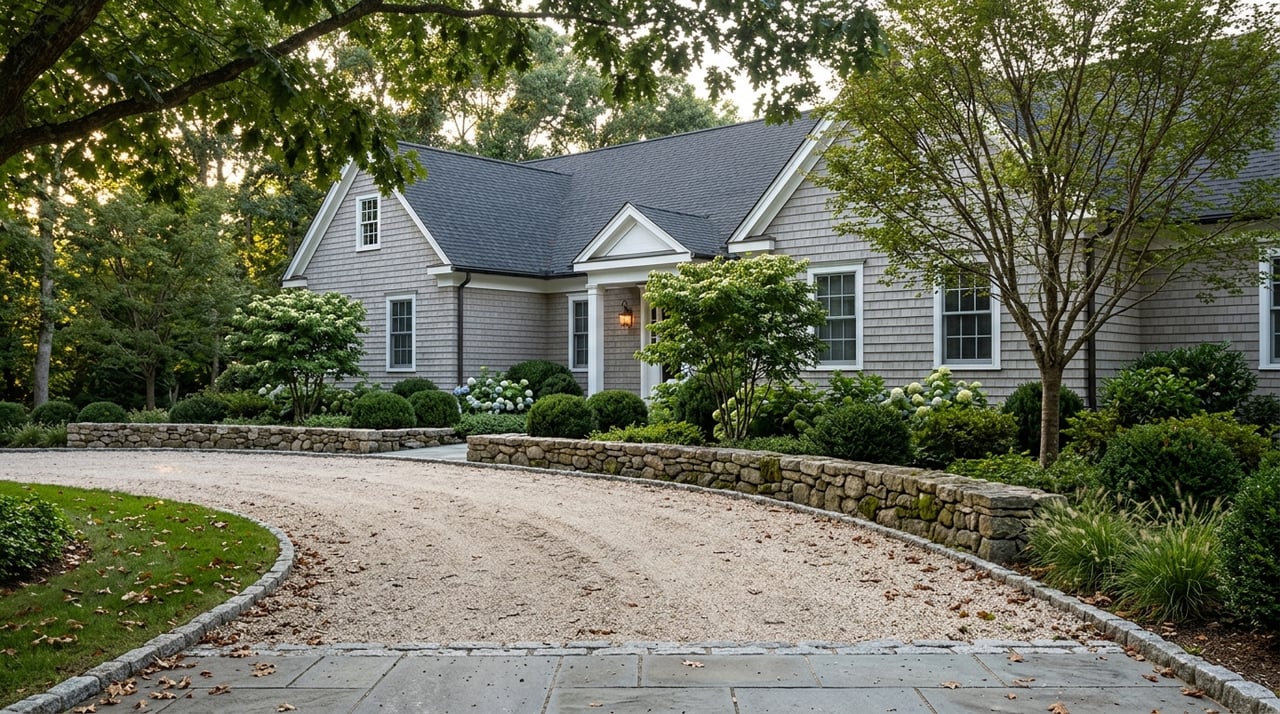
If you are looking for North Shore luxury, price alone is not what sets a place apart. What often matters more is how a village feels day to day: private, scenic, lightly developed, and connected to the water without losing convenience. That is exactly why Laurel Hollow and Oyster Bay Cove keep drawing discerning buyers who want more than a beautiful house. Let’s take a closer look at what makes these two villages stand out.
Estate-Style Living Feels Built In
One of the biggest reasons buyers gravitate to Laurel Hollow and Oyster Bay Cove is their low-density, estate-like setting. These are not places that feel crowded or overly commercial. They offer a quieter residential character that many luxury buyers want but struggle to find elsewhere.
Laurel Hollow is especially distinctive in this regard. According to the village’s 2025 stormwater report, it spans about 3.16 square miles, has roughly 1,940 residents, and includes about 600 single-family dwellings. The same report states that the village is exclusively zoned for single-family residential use and requires a 2-acre minimum lot size, which helps preserve a spacious, private feel.
That zoning matters because it shapes daily life. Large lots, fewer homes, and limited through-traffic can create a sense of separation from busier nearby areas. Laurel Hollow’s road system reinforces that feeling as well, with only 12.7 centerline miles of village-owned roads and the rest privately owned.
Oyster Bay Cove offers a similar appeal on a slightly broader scale. The village says it has 728 homes and about 2,250 residents. For buyers seeking a refined residential setting, that balance of limited housing stock and village governance can feel especially appealing.
Gold Coast History Adds Character
Luxury buyers are often drawn to places with a strong sense of identity, and both villages offer that. These communities are not just large-lot residential areas. They also carry a deeper North Shore story tied to the Gold Coast era.
Laurel Hollow has a particularly notable historic link. The village history page notes that much of its northern section was once part of Louis Comfort Tiffany’s Laurelton Hall estate. That legacy adds a layer of distinction that buyers often value, especially when they want a home in an area with architectural and cultural depth.
Oyster Bay Cove also reflects that classic North Shore character. Incorporated in 1931, it has long been associated with estate-style properties, wooded settings, and a quieter village scale. For many buyers, that combination feels more timeless than trend-driven.
Water Access Elevates the Lifestyle
For luxury buyers on Long Island’s North Shore, water access can be a major deciding factor. Laurel Hollow and Oyster Bay Cove offer a version of waterfront living that feels controlled, local, and private rather than crowded or overly public.
Laurel Hollow Beach is village-run under a license from the Town of Oyster Bay. The village states that the beach is open from Memorial Day through Labor Day, and that permits are required for beach parking, dinghy and kayak storage, and mooring. For buyers who enjoy boating or spending time by the water, that setup adds meaningful lifestyle value.
Oyster Bay Cove offers its own resident-focused access. The village owns a small recreation area adjacent to the bay on the north side of Cove Road, and access is limited to residents and their guests. The village also issues permits for beach parking, kayak racks, and moorings, which supports a more private waterfront experience.
This kind of access tends to resonate with buyers who want to enjoy the shoreline without giving up discretion. It is less about a public beach scene and more about easy, managed access to a North Shore coastal lifestyle.
Preserves Strengthen Privacy and Beauty
Another major draw is the preserved land surrounding these villages. Open space helps support the quiet, natural feel that many luxury buyers want, and it also protects the character of the area over time.
Oyster Bay Cove highlights several preserves within the village, including Cushman Preserve, Fox Hollow Preserve, Red Cote Preserve, and Tiffany Creek Preserve. According to the village, these include trail access, small parking areas, and preserved acreage such as 15 acres at Cushman, 26 wooded acres at Fox Hollow, and 30 acres at Red Cote.
That network of preserved land adds more than scenic value. It helps create buffers, keeps the setting feeling green and established, and gives residents easy access to outdoor recreation close to home. For buyers who value nature as part of daily living, that can be a powerful advantage.
The broader area adds even more appeal. Nassau County describes nearby Muttontown Preserve as 550 acres of fields, woodlands, ponds, and estate grounds with miles of marked trails. That kind of nearby open space helps reinforce the sense that this part of the North Shore offers room to breathe.
Seclusion Without Isolation
A private address is important, but so is convenience. One reason these villages continue to attract upper-tier buyers is that they feel secluded without feeling cut off.
Laurel Hollow is surrounded by Cold Spring Harbor, Oyster Bay Cove, Syosset, and Oyster Bay. That placement gives you access to established North Shore destinations while still living in a more tucked-away residential setting. For many buyers, that is exactly the balance they want.
The Oyster Bay Long Island Rail Road station is another practical advantage. The MTA says the branch extends to Oyster Bay, and riders heading to Penn Station, Grand Central, or Atlantic Terminal transfer at Jamaica. That gives commuters and frequent city visitors a workable rail option without needing to live in a denser downtown environment.
The station area also connects to local attractions. An MTA guide notes that the Oyster Bay station sits across from Theodore Roosevelt Memorial Park and within walking distance of downtown Oyster Bay, Raynham Hall, the Oyster Bay Railroad Museum, and Beekman Beach. That makes the broader area feel active and connected, even while the villages themselves remain quiet.
Nearby Landmarks Add Everyday Value
Part of what makes Laurel Hollow and Oyster Bay Cove feel special is what surrounds them. The nearby mix of historic estates, waterfront destinations, and preserved landscapes gives the area a depth that many luxury suburbs simply do not have.
Planting Fields Arboretum is one of the standout destinations nearby. Its directions page notes that it is about 1.5 miles west of Oyster Bay station. For buyers, that means access to one of the North Shore’s best-known landscape and estate settings is close at hand.
Sagamore Hill National Historic Site also adds to the area’s appeal. Located on the Cove Neck peninsula between Oyster Bay and Cold Spring Harbor, it includes a nature trail leading to Eel Creek and Cold Spring Harbor. This helps define the local lifestyle as not just residential, but also scenic and culturally rooted.
When you combine these landmarks with beaches, boating access, and preserves, the result is a location that feels both elegant and grounded. That is often what buyers are really searching for when they look at North Shore luxury.
Why Buyers Keep Choosing These Villages
In the end, luxury buyers are not simply choosing square footage. They are choosing privacy, setting, and a lifestyle that feels hard to replicate. Laurel Hollow and Oyster Bay Cove offer a rare combination of large-lot residential zoning, village-scale character, controlled waterfront access, preserved land, and proximity to North Shore hubs.
Oyster Bay Cove also notes that the village is served by Oyster Bay-East Norwich, Syosset, and Cold Spring Harbor school districts. For relocating buyers, that information can be an important part of narrowing the search based on location and service area. In Laurel Hollow, the village remains heavily residential, with an elementary school and Cold Spring Harbor Laboratory among the few nonresidential uses identified in the research.
That is what gives these villages their staying power. They feel refined and established, but never overly busy. For buyers who want a North Shore home that offers privacy, nature, water access, and enduring character, Laurel Hollow and Oyster Bay Cove continue to stand apart.
If you are thinking about buying or selling on the North Shore, working with local insight matters. Batul Morbi offers a boutique, high-touch approach backed by decades of market knowledge to help you navigate luxury real estate with confidence.
FAQs
Why do luxury buyers choose Laurel Hollow?
- Laurel Hollow appeals to many luxury buyers because it offers large-lot single-family zoning, a low-density residential setting, village beach and mooring access, and a strong North Shore estate character.
What makes Oyster Bay Cove attractive to luxury homebuyers?
- Oyster Bay Cove stands out for its small-village scale, resident-focused waterfront access, preserve network, and close proximity to Oyster Bay and other North Shore destinations.
Does Laurel Hollow offer water access for residents?
- Yes. Laurel Hollow Beach is village-run, and the village states that permits are required for beach parking, dinghy and kayak storage, and mooring.
Are there preserves in Oyster Bay Cove?
- Yes. The village identifies Cushman Preserve, Fox Hollow Preserve, Red Cote Preserve, and Tiffany Creek Preserve as part of its local preserve network.
How accessible are Laurel Hollow and Oyster Bay Cove from New York City?
- These villages offer access to the Oyster Bay LIRR station, where service connects riders to Penn Station, Grand Central, and Atlantic Terminal via a transfer at Jamaica.
What kind of setting can you expect in Laurel Hollow and Oyster Bay Cove?
- You can expect a low-density, estate-style environment with large residential lots, preserved open space, and a quieter village feel that differs from more broadly suburban areas.