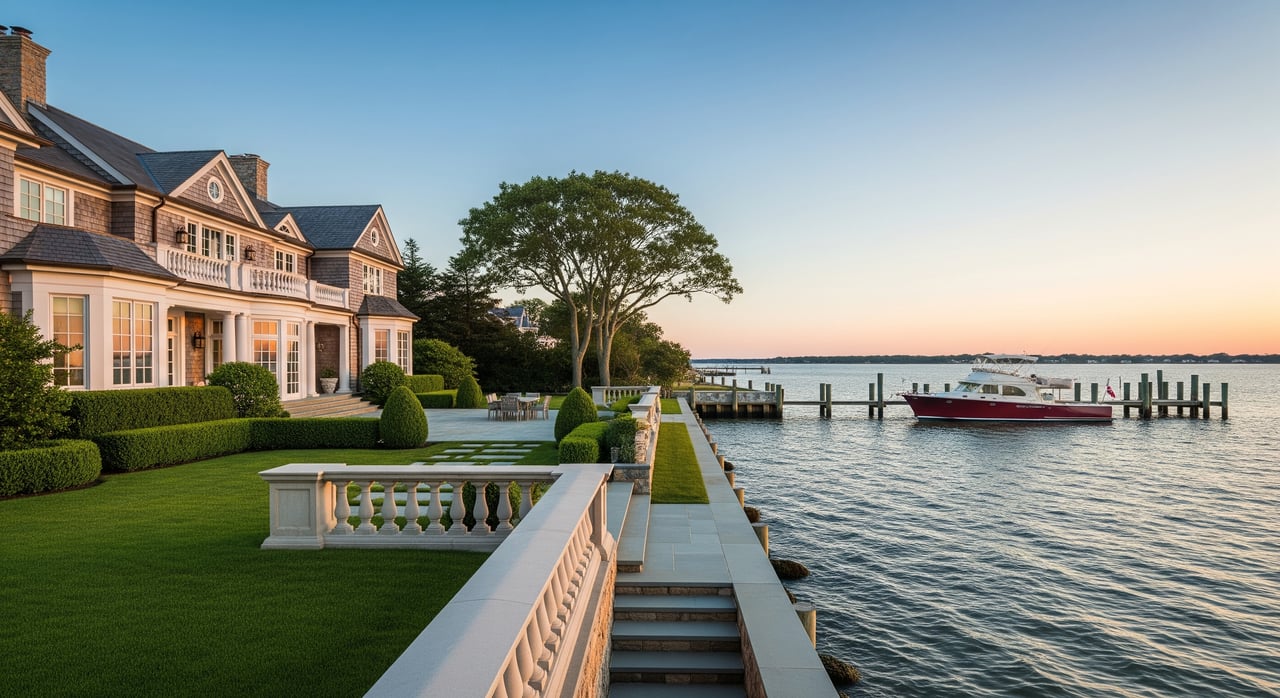
You know a Sands Point waterfront is not like any other home. Its value lives in the views, the shoreline, and what the water lets you do. Pricing it right takes more than a quick look at recent sales. In this guide, you will learn how to weigh the factors that drive value, how to choose the right comps, and how permits, insurance, and timing affect your net price. Let’s dive in.
What drives value on Sands Point waterfronts
View quality and elevation
Your view is often the largest source of premium. Panoramic, unobstructed Long Island Sound vistas usually command more than partial or cove views. Elevation and sight lines matter too. A higher perch with long-range water views and minimal obstructions reads as rare and valuable.
Document where you stand: open Sound vs. a protected cove, angle of view, and any seasonal changes. Match your property’s view type to sales with similar view classifications when building comps, or apply reasoned adjustments when perfect matches do not exist.
Lot size vs. shoreline frontage
Two measurements matter here. Total lot area supports overall estate utility, while linear shoreline frontage often drives direct water access and privacy. Confirm deeded shoreline footage, not just a rough tape measure, since irregular boundaries and curves can mislead.
Also separate usable upland from regulated tidal wetlands. Wetland portions may not be buildable and can reduce how much of a large parcel truly functions for living space, amenities, and future improvements.
Dock potential and marine infrastructure
A private dock or a clear path to permit one can shift buyer demand and price. Buyers who boat will ask about depth at low tide, boat size limits, and proximity to channels. The condition of your bulkhead, seawall, and existing dock matters too. A failing or unpermitted structure is a cost buyers will discount.
Before pricing, assemble permits, prior approvals or denials, and any water depth or bathymetry data. For future work, expect that approvals can involve the NYS DEC tidal wetlands permits, the U.S. Army Corps of Engineers Regulatory Program, and local village and town reviews. Larger projects can take several months to over a year.
Renovation level, systems, and historic fabric
Buyers in this segment value turnkey condition, but they also pay for great bones. Waterfront exposure stresses systems, windows, and exteriors. Be realistic about whether the home is move-in ready, updated but not luxury grade, needs major work, or is a tear-down.
Mechanical and structural soundness carry extra weight by the water. Salt air, storm exposure, and moisture test roofs, HVAC, electrical, and waterproofing. Any historic or architectural significance can add appeal, but it may come with limits on changes. Pricing should reflect both premium and constraints.
Privacy, landscaping, and access
Privacy is a driver for high-end buyers. Tree canopy, setbacks, and the orientation of main rooms relative to neighbors shape perceived seclusion. Deeded access to a private beach, private road, or membership in a beach or harbor association can add appeal or carry fees that impact net value.
Well-kept terraces, pathways, lighting, and thoughtful landscaping enhance the experience of the view and can support pricing.
Flood risk, elevation, and resiliency
Flood zone status, Base Flood Elevation, and your lowest finished floor elevation influence both perceived risk and real holding costs. Lenders may require flood insurance in higher-risk zones. Buyers and insurers increasingly value resiliency measures such as elevated structures, impact-rated openings, generators, and hardened bulkheads.
Use the FEMA Flood Map Service Center to confirm your flood zone and pursue an elevation certificate. For long-term risk awareness, the NOAA Sea Level Rise Viewer helps illustrate possible future exposure that some buyers will consider.
How to select comps that fit
Start with close-in waterfront matches
Begin with recent sales of waterfront parcels in Sands Point. Focus on view type, shoreline footage, dock status, flood zone, elevation, renovation level, and privacy. Because inventory is limited and individual lots vary, you may only find a few close matches.
When to expand the map
If direct matches are thin, widen the search to nearby North Shore communities with comparable shorelines and boating utility, such as Manhasset Bay, Port Washington, or Kings Point. Apply larger, well-documented adjustments when leaving Sands Point, and lean on multiple data points rather than a single outlier sale.
Quantify key adjustments
Common adjustment categories include:
- View classification and view breadth
- Shoreline frontage and usable upland area
- Dock presence, permits, and bulkhead condition
- Flood elevation, zone, and mitigation needs
- Renovation level, functional utility, and square footage
- Privacy, landscaping, and any shared-access costs
When possible, use paired sales to estimate the value of a single feature, like a dock, across otherwise similar homes. If paired sales are not available, combine market participant interviews, contractor cost estimates, and proportionate adjustments to create a supportable range.
Permits, timelines, and pricing risk
Dock and bulkhead approvals
Typical shoreline work may require NYS DEC approvals, U.S. Army Corps authorization for work in navigable waters, and local permits from the Village of Sands Point and the Town of North Hempstead. Straightforward repairs can take months. Larger, new, or more complex projects can extend for several months to over a year due to multi-agency review and potential environmental mitigation.
Treat permit risk as a pricing factor. If your list price assumes a future dock, present the evidence that approvals are feasible. If permits are uncertain, show a scenario without the improvement and price within that range.
Proof of permits and denials
Buyers will pay for certainty. Include copies of existing permits, engineering letters, and any past approvals or denials in your data room. If you have secured a submerged lands authorization where required, include it. Clear documentation reduces friction and helps preserve your price.
Insurance, financing, and ongoing costs
Flood insurance and elevation certificates
Flood insurance requirements and premiums depend on your zone and elevation. Lenders may require coverage in higher-risk areas, which can influence buyer budgets. Obtain an elevation certificate early. It clarifies potential premiums under the National Flood Insurance Program or private market carriers and supports clean underwriting.
Maintenance and capital planning
Shoreline infrastructure has a life cycle. Bulkhead and dock replacement, erosion control, and drainage improvements are major capital items. An inspection and cost estimate from a marine contractor can anchor your pricing and help you negotiate from a position of transparency.
Build your pricing file: seller checklist
Gathering the right documents allows a cleaner comp set and stronger pricing. Aim to assemble:
- Deed, legal description, and any riparian rights information
- Recent survey with measured shoreline frontage and lot lines
- Site plan, building plans, zoning details, and variances if any
- Copies of permits for docks, bulkheads, or shoreline work, plus any denials
- Photo documentation of views during leaf-on and leaf-off seasons
- Condition reports for bulkhead, dock, foundation, roof, and mechanicals
- Elevation certificate and FEMA flood zone designation
- Recent comparable sales within 12 to 24 months with key attributes noted
- Tax assessment, recent bills, and any association dues or special assessments
- Utility service details and septic or sewer connection status
- Landscape and privacy buffer details, including easements or rights of way
Pricing strategy for unique estates
Use multiple valuation approaches
For distinctive properties, do not lean on one method. Start with the Sales Comparison Approach, then cross-check with a Cost Approach that considers replacement cost less depreciation for the residence and marine structures. While the Income Approach is rarely primary for owner-occupied estates, it may support value if the property has rental or accessory income potential.
Present a value range with assumptions
When high subjectivity exists, present a supported range rather than a single target. Show how the number shifts under different assumptions for view premium, dock feasibility, or bulkhead remediation costs. A sensitivity analysis builds trust and gives buyers confidence that your price is grounded in evidence.
When to bring in specialists
Unique waterfronts reward a team approach. Consider engaging:
- A waterfront-experienced appraiser to develop and document adjustments
- A coastal engineer or marine contractor to evaluate bulkhead, dock, and shoreline stability
- Local village and town building officials to clarify current codes and permit timing
- An insurance broker with coastal experience to estimate flood and wind coverage
- A seasoned North Shore broker who understands how luxury buyers value privacy, boating utility, and permits
This expert input supports both pricing and negotiation. It also equips buyers with the confidence they need to meet your terms.
Your next step
If you are preparing to price a Sands Point waterfront, you deserve a plan that reflects your home’s view, shoreline, and permit reality. We build that plan around verified documents, expert inspections, and a comp set that mirrors your property’s true utility. With three decades of North Shore experience, polished Compass marketing, and concierge-level preparation, we help you command a premium while reducing friction.
Ready to talk strategy and timing for your estate? Connect with Batul Morbi to request a confidential valuation and next-step plan.
FAQs
What adds the most value to a Sands Point waterfront home?
- View quality, shoreline frontage, and dock presence or permit feasibility are often the biggest premium drivers, with condition, elevation, and privacy shaping the final number.
How do docks and permits affect Sands Point pricing?
- A permitted dock or clear, documented path to permit one can materially increase value, while uncertainty or failing marine structures can require price discounts for risk and repair costs.
How do flood zones impact insurance and financing for Sands Point homes?
- Higher-risk zones often trigger lender-required flood insurance and higher premiums, so an elevation certificate and verified flood zone help set expectations and keep deals on track.
How should I choose comps for a unique Sands Point estate?
- Start with recent Sands Point waterfront sales that match view, frontage, dock status, elevation, and renovation, then expand outward with documented adjustments when exact matches are scarce.
What timeline should I expect for dock or bulkhead permits on Long Island?
- Simple repairs can take months while larger or more complex projects may take several months to over a year due to multi-agency reviews and possible environmental mitigation.
What documents should I prepare before listing a Sands Point waterfront?
- Secure a recent survey, shoreline measurements, permits, condition reports, elevation certificate, flood zone details, tax records, and a curated set of comparable sales to support pricing.